
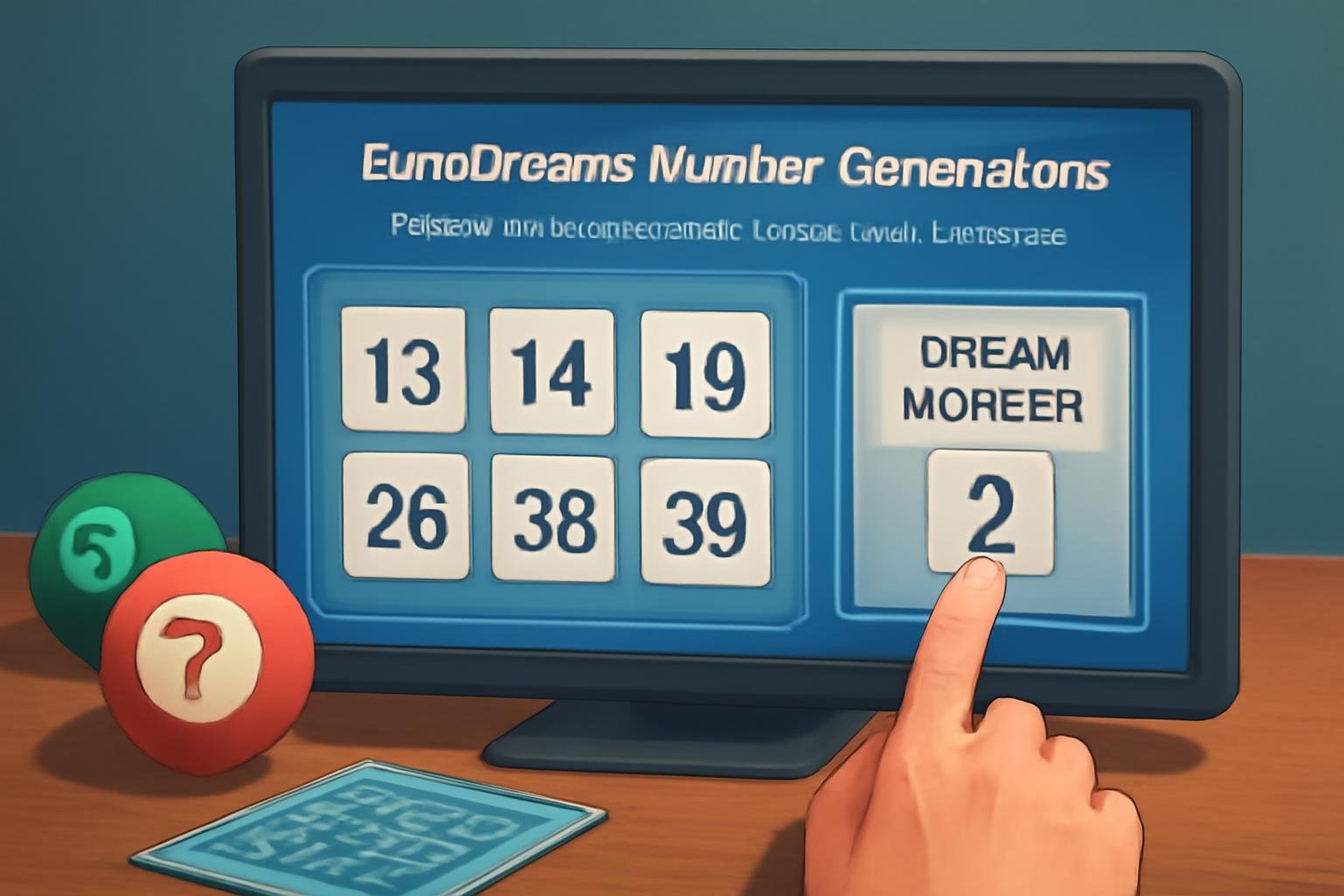
EuroDreams Number Generators: A Dream Number Is a Separate Choice
The name EuroDreams emphasizes the form of its top award, but generating a selection is a simpler task. The numbers must follow a two-field structure. Six main values belong together, and a Dream Number belongs in its own field. Confusing that extra value with a seventh main number changes the object being described.
The standard main format selects six distinct values from 1 to 40 and one Dream Number from 1 to 5. A eurodreams number generator should identify those limits clearly and retain them when output is copied or saved. The result is an example of a structured selection, rather than a claim about a future prize or an accepted entry.
Begin with a format check
The main field has a different size from several other European lotteries. A generic six-number preset is therefore insufficient unless it uses the correct upper limit. Check the count and range in the tool itself instead of inferring them from a familiar-looking group of numbers.
The Dream Number also needs its own validation. It can share its printed label with one of the main values because it comes from a separate pool. A global rule forbidding any repeated label across all seven displayed values would exclude legitimate selections. The correct no-duplicate rule applies to the six main values within their field.
The extra field should survive every display change
A useful generator can sort the main set for readability while leaving the Dream Number clearly marked. Sorting all seven values into one row can remove the distinction. The problem is most obvious when the Dream Number is small and appears naturally near the beginning of a combined sorted list.
Use explicit wording when saving an example in plain text. A field labelled Dream Number communicates more than colour alone, particularly in a printed copy or an accessible view. The saved record should contain the game name, all six main values and the separately identified Dream Number without depending on the original page layout.
Recurring-prize language is not selection logic
EuroDreams is associated with recurring awards under its prize rules. Those terms concern what a qualifying winner may receive and for how long. They do not alter the six-plus-one number structure or give a generator a reason to choose a particular Dream Number.
A page should distinguish number selection from explanations of payout options or local conditions. An independently generated line is not an income calculation, a registered claim or evidence that an official purchase was made. The accepted entry and current operator documentation remain the sources for participation and award terms.
Compare complete selections correctly
If two examples have the same six main values and different Dream Numbers, they are different complete selections. If they have the same values in both fields but a different main-value display order, they are the same complete selection. A duplicate checker needs to preserve that distinction.
This is particularly useful for educational simulations. A simulation studying full top matches must compare both fields, while an exercise studying main matches alone can ignore the Dream field for that specific question. The record should retain all fields so that the distinction is a deliberate analytical choice rather than an accidental loss of information.
Randomness does not require an attractive spread
A valid main set can contain adjacent values, repeated ending digits or an uneven balance between odd and even numbers. Those features do not identify a particular selection as more or less likely than another particular valid selection in a fair draw. Visual expectations are not the same as probability rules.
Filters can create examples with a preferred appearance, but the tool should state that it is applying preferences. Historical frequency lists also do not establish that the next independent draw must favour a value that has appeared less often. A useful generator explains its selection method without turning such preferences into unsupported predictive claims.
Check the final record against its purpose
For a demonstration, label the values as hypothetical. For a saved selection, preserve the format and field labels. If someone separately chooses to make an official entry, check the accepted transaction details there rather than assuming that a saved generator result establishes participation.
A saved example can be tested by asking a reader to reconstruct its two fields without seeing the original page. If the reader needs the old colours or box positions to identify the Dream Number, add an explicit text label. This small test addresses a real source of transfer mistakes without making any claim about the selection's future likelihood.
These small distinctions make EuroDreams output easier to understand and use accurately. The generator's contribution is a valid six-number main set paired with a valid, visible Dream Number. Keeping that contribution clear allows readers to explore the game format without confusing convenience with forecasting, entry acceptance or the conditions of a recurring award.