
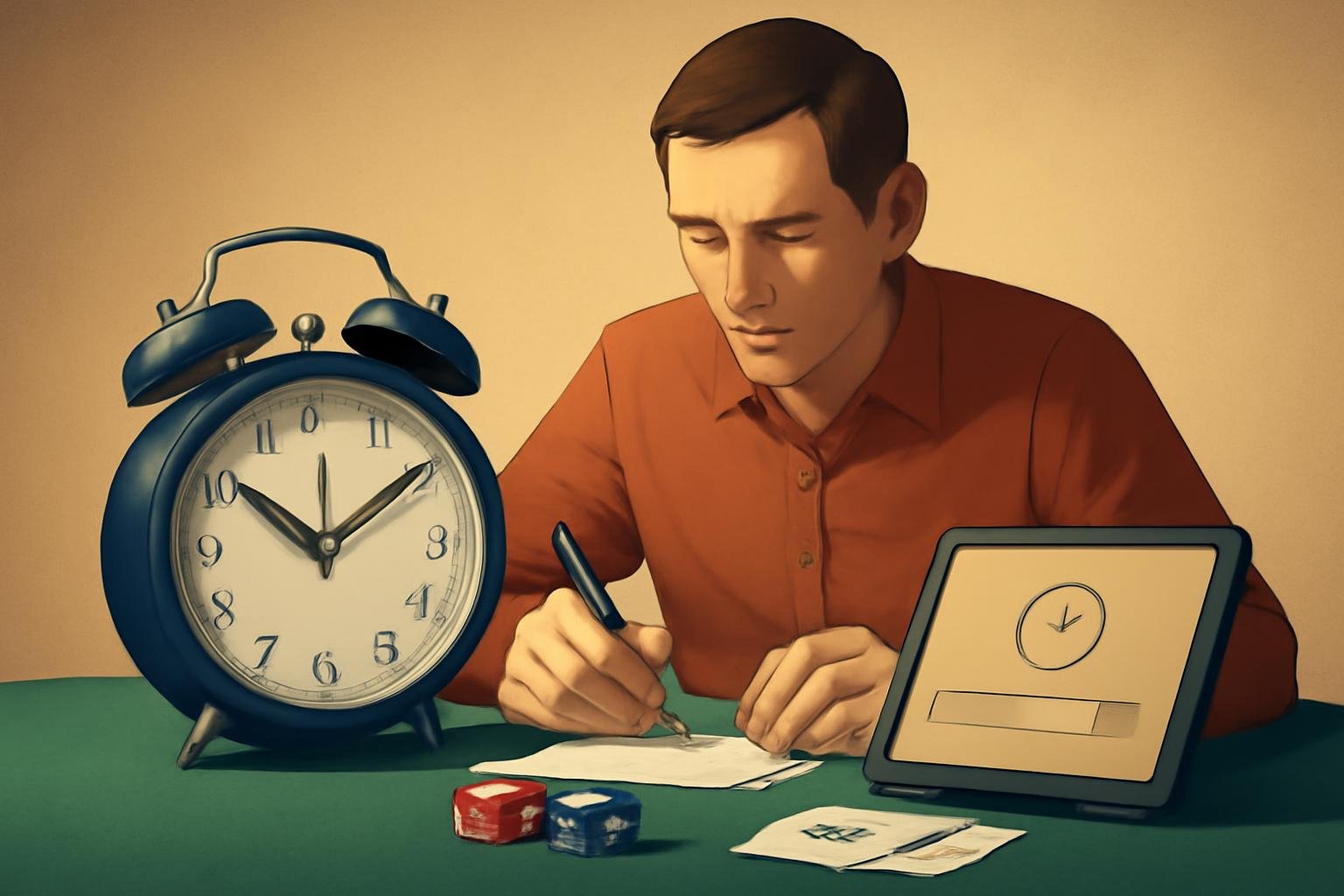
How to Set a Time and Spending Limit Before Online Casino Play
A useful casino session plan starts before you open a game. Decide how much time and money you are prepared to spend, then treat both limits as firm boundaries—not targets to reach or losses to win back. This simple routine can make it easier to keep gambling within its place as paid entertainment.
Choose a spending limit you can afford to lose
Set aside an amount that is not needed for rent, bills, food, debt payments, savings, or other essentials. Consider the whole amount spent on gambling, not just the first deposit. If losing the money would create stress or affect a commitment, choose a lower limit or do not play.
For example, suppose you set a session budget of $30. That is a maximum planned cost, not a suggested amount to wager on one game. You might spend it gradually, but you should not add more after it is gone. Never use credit or borrow money to keep a session going.
Set a time limit as well
Money limits alone do not tell you when to stop. Pick a finish time before playing, and allow a little time to close the session rather than starting another game just before you need to leave. A phone alarm or calendar reminder can help, especially if you tend to lose track of time while focused on a game.
- Choose a start and finish time that do not interfere with sleep, work, study, or family responsibilities.
- Plan a specific activity for afterwards, such as making dinner or taking a walk.
- Stop when the planned time ends, even if a game is in progress or you feel close to a win.
Make the limits practical, not vague
“I’ll stop when I’ve had enough” is difficult to apply during play. A written plan is clearer: “I will spend no more than $30 and play for no longer than 45 minutes. I will not deposit again or extend the session.” Choose amounts and durations that suit your own finances and schedule; there is no universal limit that is right for everyone.
Before playing, check what a game requires and how its features work. A slot paytable guide can help you review bets, symbols, and bonus mechanics before deciding whether to play. Information about a game is not a reason to raise your budget, though. For example, RTP information describes a theoretical return over extensive play, not what an individual session will return or when it might do so.
Keep track of deposits and breaks
Use a note or simple list to record deposits and the time you started. If you play more than one kind of game, include all of them in the same session budget. Exploring different casino game types does not change the total amount you have chosen to risk.
Take a break if you feel frustrated, distracted, or tempted to change your limits. A break is not a tactic for changing the odds; it is a chance to step away and decide whether you still want to continue within the original plan. If you have reached either limit, close the game instead.
Notice when the plan is slipping
Repeatedly adding money, extending sessions, hiding gambling, or trying to recover losses can be signs that gambling is becoming difficult to control. If that happens, stop playing and consider talking with someone you trust or contacting a gambling-support service in your area. If a site offers spending or time controls, read its terms and settings carefully; do not assume a feature is available or that it replaces your own boundaries.
The practical takeaway is straightforward: decide your affordable spending cap and finish time in advance, keep the limits visible, and stop when either one is reached. If you cannot stick to that plan, take a break rather than negotiating with yourself mid-session.